
The Evolution Of Soap: From Handmade Soap To Fully Automated Production
Jun 30, 2026
The Evolution of Soap: From Handmade Soap to Fully Automated Production

The history of soap is a journey that spans from accidental discovery to industrial-scale production, and from an exclusive luxury for the aristocracy to a product accessible to the general public. This evolution unfolded along distinct paths in the East and the West, eventually converging during the Industrial Revolution to form a vital branch of the modern cleaning industry.
In ancient China, the earliest methods of cleansing relied on natural materials: during the Zhou Dynasty, people used rice-rinsing water for bathing and removing dirt, while the Qin and Han dynasties saw the widespread use of soap pods (the fruit of the soap tree) for washing clothes and hair, often in conjunction with plant ash and natural alkali-practices that persisted for millennia.
Around 70 AD, the Roman scholar Pliny provided the first explicit account of the production of solid soap-made by reacting goat tallow with wood ash-in his work *Natural History*. Archaeological excavations at Pompeii have uncovered a complete ancient Roman soap workshop, indicating that small-scale soap production was already underway at the time; however, soap was then used primarily by the aristocracy for washing fabrics rather than for personal hygiene. Following the decline of the Roman Empire, soap-making techniques were lost in Europe for a time, only to be revived in Italy and Spain during the 8th century.
The Industrial Revolution of the 18th century ushered in the industrialization of soap making, with a series of chemical breakthroughs resolving key issues regarding raw materials. In 1791, French chemist Nicolas Leblanc invented a method to produce caustic soda cheaply from common salt, replacing the traditional process of extracting alkali from wood ash and drastically reducing soap production costs. In 1823, German chemist Michel Eugène Chevreul elucidated the chemical relationships between fats, glycerol, and fatty acids, establishing the precise ratios of oil to alkali required for soap making and laying the chemical foundation for the modern soap industry. By the mid-19th century, Belgian scientist Ernest Solvay improved the alkali production process, further enhancing both yield and quality, thereby paving the way for the large-scale industrial production of soap.

With the large-scale importation of inexpensive palm oil and coconut oil from the colonies, the soap industry expanded massively, transforming soap from a luxury item into an everyday consumer product accessible to the general public; meanwhile, advancements in fragrance technology made the scent of soap more pleasant, leading to the emergence of scented soap as a distinct product category.
Soap-making technology has evolved from the traditional saponification reaction to incorporate more refined production controls, and soap remains one of the most important cleaning products in people's daily lives.


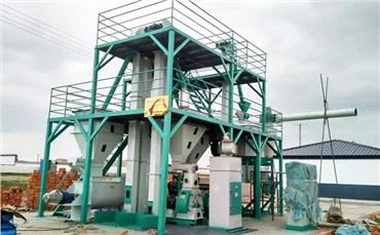
We specialize in manufacturing soap production equipment. Our machines are exported to Africa and Southeast Asian countries, including Algeria, Ethiopia, Uganda, Ghana, Nigeria, and South Africa. Our workers can travel abroad for installation. We have extensive overseas sales experience. Welcome to visit our factory in China and purchase our soap production equipment.
Welcome to connect the Manager:
Mr.vincent,
Whatsapp:008618639007627,
Email: vincent@fandamachinery.com